When you go to buy a laser for your manufacturing needs, the internal design is usually picked but you might see options like CO2 laser, fiber laser, diode pumped etc. What is the difference between all these? Let’s break it down.
General Principles
The fundamental principle behind lasers is a cascading effect, where a light particle (a photon) passes through a gain medium, which can be a solid, liquid or gas. When the photon passes through the medium, it can bump into the atoms in such a way that another identical photon gets released. These two photons can then each continue to liberate more photons, and so on and so forth creating a chain reaction (For this to happen, the atoms that the first photon and subsequent photons bump into must have some energy already). The medium, called the active medium or gain medium, has an impact as to what kind of lasers are produced. Laser itself is an acronym; it stands for Light Amplification by Stimulated Emission of Radiation.
Laser by type
Solid State lasers
Solid state lasers were the first ‘kind’ of laser to be realised, with the first being manufactured and produced in the 1960s. They typically function with a ‘doped’ medium. A common solid state laser, such as an Nd:YAG is an Yttrium Aluminium garnet, which looks like a crystal. It is doped with Neodymium atoms which are the active lasing medium. To excite the medium, these lasers were originally excited or ‘pumped’ with optical flashlamps, but today are excited via diode, known as Diode-Pumped Solid State Lasers (DPSSLs).
Fiber lasers
Fiber lasers operate similarly to Solid State lasers, however instead of a crystal, a fiber optic medium is doped. The benefit of these lasers is that the laser is well confined and directed within the fiber. These lasers are particularly common today for applications like cutting, welding, engraving, marking and additive manufacturing.
Gas lasers
The laser you’re probably first introduced to is a red laser pointer; the one used at conference presentations or that cats case. In this case, a small cell / capillary holds helium and neon at a ratio of about 10 to 1. A current (about 3 mA) is passed through the gas to excite the helium atoms; these then collide with the neon atoms. The neon atoms get excited, and then release their energy as red light, which can also further stimulate other excited neon atoms to release their energy.
In manfacturing today, the most common uses of CO2 lasers is in laser eye surgery, and as the driving laser in ASML’s driving laser for their state of the art EUV lithography machines. The reason for this is discussed in another post!
Many applications that historically used gas lasers now have been replaced by solid state and diode pumped solid state lasers, because of relatively better efficiency, size, durability and cost.
Semiconductor lasers
Semiconductor lasers, or laser diodes operate similarly to classic diodes i.e. they have a PN junction, however these diodes have an additional layer at the junction that produces spontaneous (amplified) emission. These lasers are often used as pumping sources for fiber and solid state lasers.
Laser by Operation
As well as being categorised by type, lasers can be classified by operation.
Continuous Wave lasers are ‘always’ on – laser light is continuously emitted from the laser – think of a laser pointer. These are commonly used for welding and cutting
Pulsed laser systems emit ‘packets’ or, as is in the name, ‘pulses’ of light at typically equal durations. Pulsed lasers can emit thousands to hundreds of thousands of pulses a second. Depending on the laser and pulse duration, different methods are used to ‘pulse’ the laser; Q-switching, gain-switching and mode locking for example. These will be discussed another time
Continuous wave lasers have higher average laser power, but the peak power is higher in pulsed lasers. The short the pulse, the higher the peak power.
Lots to choose from – what do I pick?
When dealing with OEMs or deciding what laser to pick, there are many options to choose from
- Gas lasers, such as CO2, are useful for cutting non metals i.e. wood, stone and plastic and for high power specialist applications, such as EUV nanolithography (I don’t think anyone will be building one of those any time soon).
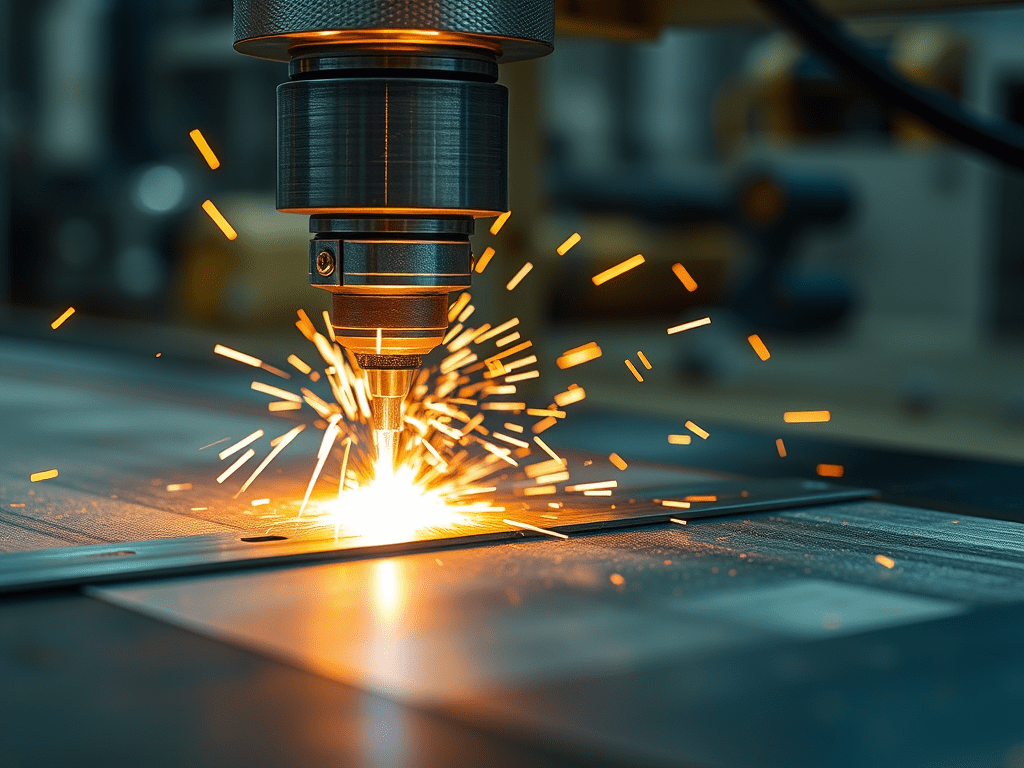
- Fiber lasers are probably the most common laser nowadays for its flexibility, used in engraving, marking, additive manufacturing. Comparably to solid state lasers, they are more suitable for long term running.
- Solid state lasers are often found in legacy machining, but still have place in micromachining, for example. For applications where both high power and short pulses are required, solid state lasers offer the most affordable and are more frequently found in laboratory settings.
- Diode lasers are typically used to pump other lasers for applications.
- For pulse duration, cutting and welding would be achieved via CW or high pulse length lasers. Micromachining would require nano and femtosecond pulses
 SciRELOAD